Toc figures small

30.07.2011 14:00 Uhr

Protein translocation across the plastid membranes

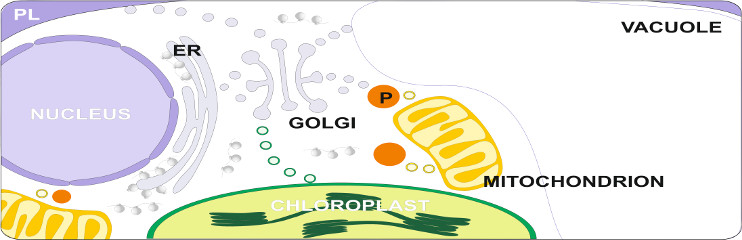
The eukaryotic cell is characterized by a high degree of compartimentalisation. In general, almost all proteins residing in the various organelles are synthezied on cytosolic ribosomes and are co- or postranslationally imported (e.g. into the endoplasmic reticulum or the peroxisomes). For this purpose, sophisticated systems for proper recognition, targeting and translocation are required, which can be adapted to cellular or environmental changes. Although the mechanisms are different for the single compartments, general principles of these processes can be derived. The endosymbiontic organelles (mitochondria and chloroplasts) are exceptional since they are bound by two envelope membranes across which they have to import more than 90% of their protein endowment.

Studying plant chloroplasts, we like to understand how the eukaryotic cell organizes such kind of transport processes. Thereby, we try to understand not only the initial processes of protein recognition and targeting to the organellar surface, but investigate also the involved multiproteinaceous membrane-bound translocons (TOC and TIC), which facilitate the passage of plastid proteins across the membranes. To solve the questions of how the import process is regulated and energized, how the involved proteins act together and how the translocon look-like and a molecular level and how they function is the main objective of our studies.

Regulation and function of heat stress transcription factors and molecular chaperones in protein homeostasis
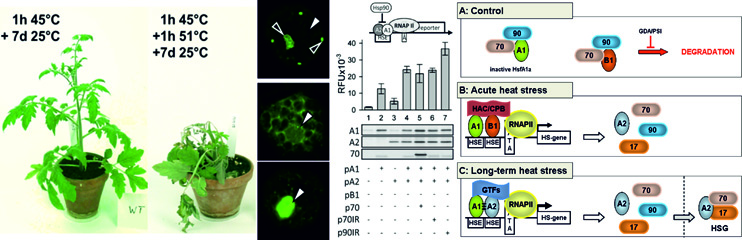
figure hsf new_resized

Plant Responses to High Temperatures

Global warming has a negative impact on the yield of many crops around the globe. Currently the generation of varieties that can ensure a high and sustainable production of food is important to secure the nutrition of the growing human population. Our group aims to understand the fundamental cellular and organismic process that are activated when plants are exposed to high temperatures and reveal how they contribute to thermotolerance.

We specifically address the following questions:

How do plants respond to increased temperatures and what are the key processes that lead to thermotolerance?

Why some plant genotypes, organs, tissues or even cell types within the plant body are more sensitive to heat stress compared to others?

How can we improve the resilience of crops to high temperature and secure food production under more unfavourable environmental conditions?

Plants are able to induce defence mechanisms collectively called heat stress response to ensure survival and recovery from stress. At the molecular level, thermotolerance is mainly dependent on the maintenance of protein homeostasis which under stress conditions is accomplished by the accumulation of molecular chaperones such as many heat shock proteins (HSP). In addition to HSPs, hundreds other genes with various functions are induced under high temperatures, leading to an extensive cellular metabolic reprogramming.

Changes in transcriptome profile are mainly mediated by members of the heat stress transcription factor (Hsfs) gene family. Plants comprise a large number of Hsf-coding genes (e.g. 27 in tomato). We have demonstrated the function of three major Hsfs in tomato plant, namely HsfA1a, HsfA2 and HsfB1 in the onset of heat stress response and recovery from stress, but also in acclimation processes to high temperatures. We are currently characterizing additional members with tissue- and/or temperature-specific functions.

In addition, many Hsfs as well as other HS-regulated genes undergo alternative splicing under high temperatures. Alternative splicing controls transcriptome abundance and proteome diversity and therefore has a prominent role in thermotolerance. Consequently, we aim to uncover temperature-sensitive alternative splicing events that are related to thermotolerance and identify key factors involved in this process.

To reach our goals we engage various approaches using genetic, physiology, molecular and cell biology tools, as well as genomic approaches.

Five representative publications of our group:

Identification and Regulation of Tomato Serine/Arginine-Rich Proteins Under High Temperatures.
Rosenkranz RRE, Bachiri S, Vraggalas S, Keller M, Simm S, Schleiff E, Fragkostefanakis S. Front Plant Sci. 2021 Mar 29;12:645689. doi: 10.3389/fpls.2021.645689. PMID: 33854522; PMCID: PMC8039515.

Natural variation in HsfA2 pre-mRNA splicing is associated with changes in thermotolerance during tomato domestication.
Hu Y, Mesihovic A, Jiménez-Gómez JM, Röth S, Gebhardt P, Bublak D, Bovy A, Scharf KD, Schleiff E, Fragkostefanakis S. New Phytol. 2020 Feb;225(3):1297-1310. doi: 10.1111/nph.16221. Epub 2019 Nov 14. PMID: 31556121

The repressor and co-activator HsfB1 regulates the major heat stress transcription factors in tomato.
Fragkostefanakis S, Simm S, El-Shershaby A, Hu Y, Bublak D, Mesihovic A, Darm K, Mishra SK, Tschiersch B, Theres K, Scharf C, Schleiff E, Scharf KD. Plant Cell Environ. 2019 Mar;42(3):874-890. doi: 10.1111/pce.13434. Epub 2018 Oct 11. PMID: 30187931

Alternative splicing in tomato pollen in response to heat stress.
Keller M, Hu Y, Mesihovic A, Fragkostefanakis S, Schleiff E, Simm S. DNA Res. 2017 Apr 1;24(2):205-217. doi: 10.1093/dnares/dsw051. PMID: 28025318

HsfA2 Controls the Activity of Developmentally and Stress-Regulated Heat Stress Protection Mechanisms in Tomato Male Reproductive Tissues.
Fragkostefanakis S, Mesihovic A, Simm S, Paupière MJ, Hu Y, Paul P, Mishra SK, Tschiersch B, Theres K, Bovy A, Schleiff E, Scharf KD. Plant Physiol. 2016 Apr;170(4):2461-77. doi: 10.1104/pp.15.01913. Epub 2016 Feb 25. PMID: 26917685


Anabaena sp. PCC7120, a model for cell differentiation and chloroplast evolution
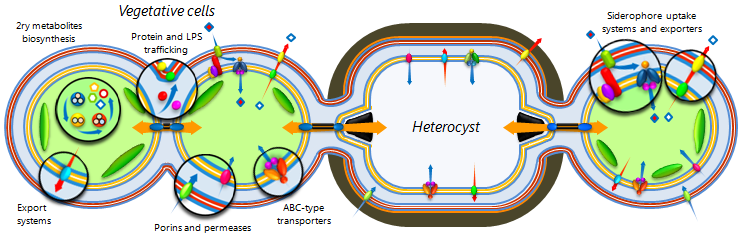
Anabaena lab figure v1.1

30.07.2011 14:00 Uhr

Cyanobacteria are a group of prokaryotic organisms characterized by their ability to fix CO2 by oxygenic photosynthesis. They are considered the ancestors of the chloroplasts and the inventors of oxygenic photosynthesis, and are among the most important primary producers of the planet. They represent a phylogenetically coherent group, but show a very diverse morphology and have colonized a wide diversity of habitats.

Cyanobacteria are Gram-negative bacteria and all bear a cell envelope architecture consisting of an inner membrane and an outer membrane separated by a periplasmic space that contains a peptidoglican layer. This sophisticated and complex cell envelope protects the cells and hosts special lipopolysaccharides (LPS) and integral membrane proteins which serve essential functions for the cell, such as nutrient uptake, cell adhesion, cell signaling and waste export. To fulfill these functions, the cell envelope requires the assistance of distinct trafficking complexes and assembly machineries to correctly deliver and insert α‑helical membrane proteins in the inner membrane and β‑barrel membrane proteins and lipopolysaccharides in the outer membrane, being the regulation of these machineries an essential process.

Filamentous cyanobacteria species are true multicellular organisms in the form of filaments of cells that show a common and continuous outer membrane and periplasm along the filament, making them a unique group of prokaryotes. Cells in the filaments communicate between each other and, in heterocyst-forming cyanobacteria such as Anabaena sp. PCC 7120, show a division of labors in different cell types. Under combined nitrogen deprivation, heterocyst-forming cyanobacteria present vegetative cells which perform oxygenic photosynthesis and heterocysts which carry out N2 fixation and do not perform concomitant fixation of CO2. These specialized cells rely on each other: heterocysts require photosynthate that is provided by vegetative cells, and heterocysts in turn provide vegetative cells with fixed nitrogen.

Nearly half of all enzymes in organisms require metals such as Mg, Zn, Fe, Mn, Ca, Cu, Co and Ni (in order of frequency), so the regulation of metal availability is a key factor and cells control the concentration of each metal in the cytosol and the periplasm through the combined actions of proteins of metal homeostasis including importers, exporters, storage proteins, delivery proteins and sensors. Cyanobacteria have high metal demands to support oxygenic photosynthesis and other metabolic activities and, in the case of iron, require an iron quota ten times higher than that of Escherichia coli. However, iron bioavailability is very low and some cyanobacteria secrete the strongest iron chelators in nature, known as siderophores, to fulfill their high iron uptake demands. Siderophores show a wide diversity of structures and can be molecules based on citric acid or peptides. The first group utilizes specific enzymes involved exclusively in these biosynthetic routes, while the second group is directed by a large family of modular enzymes called non-ribosomal peptide synthetases, which are also the cell factories for the biosynthesis of the majority of the microbial peptide secondary metabolites, such as peptide antibiotics and toxins, and are a newly discovered alternative machinery to ribosomes for the synthesis of some peptides with a huge potential for the development of new compounds and drugs.

The model organism used in our laboratory is the filamentous heterocyst-forming cyanobacterium Anabaena sp. PCC 7120, and our research is focused on understanding membrane biogenesis, trafficking through membranes and the intercellular relationships in cyanobacterial filaments; metal transport and regulation processes; and non-ribosomal peptide synthetases involved in the biosynthesis of siderophores and other secondary metabolites, such as antibiotics. All these topics are fundamental to understand the biology and ecology of these important organisms for the life of the planet, and to provide new insights in some essential processes in cells.

Plant Ribosome Biogenesis

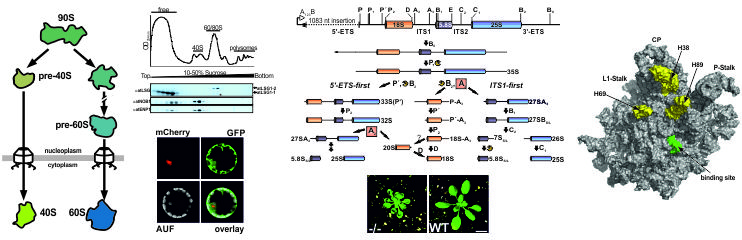
RiboBio_quer

Ribosome biogenesis is one of the major biosynthetic pathways, which, for eukaryotes, is best understood in Saccharomyces cerevisiae. Yeast ribosomes consist of 79 ribosomal proteins and four ribosomal RNAs (rRNAs). The assembly of the ribosomal subunits is a highly complex process that involves more than 200 cofactors. An exponential grown yeast culture builds around 2000 ribosomes per minute per cell, uses 60 % of its energy for this process and ca. 10% of the genome capacity is taken by ribosome biogenesis. This clearly underlines the importance of ribosome biogenesis for a living cell.

We are studying ribosome biogenesis in higher eukaryotes with focus on the model plant Arabidopsis thaliana. The general scheme of ribosome biogenesis is conserved throughout eukaryotes but it also shows differences to the best understood organism, Saccharomyces cerevisiae. Nowadays it is assumed that organism specific cofactors exist because higher eukaryotes have different developmental stages and different tissues. Furthermore it is known that tissue specific ribosomes exist in plants, because several homologs for the ribosomal proteins can be found. For us it is highly interesting to identify these cofactors by the analysis of pre-ribosomal complexes after pulldown experiments or immuno-precipitations and to analyze their special function in ribosome biogenesis. Furthermore, we make use of knock-out (T-DNA insertion) mutants of the potential ribosome biogenesis cofactors to study their influence on growth, development, ribosome biogenesis and rRNA processing. Additionally, these proteins are analyzed biochemically and we have a closer look at their enzymatic activity in vitro.

Expression and structural analysis to understand evolution of plants
schleiff_webseite_image1

30.07.2011 14:00 Uhr

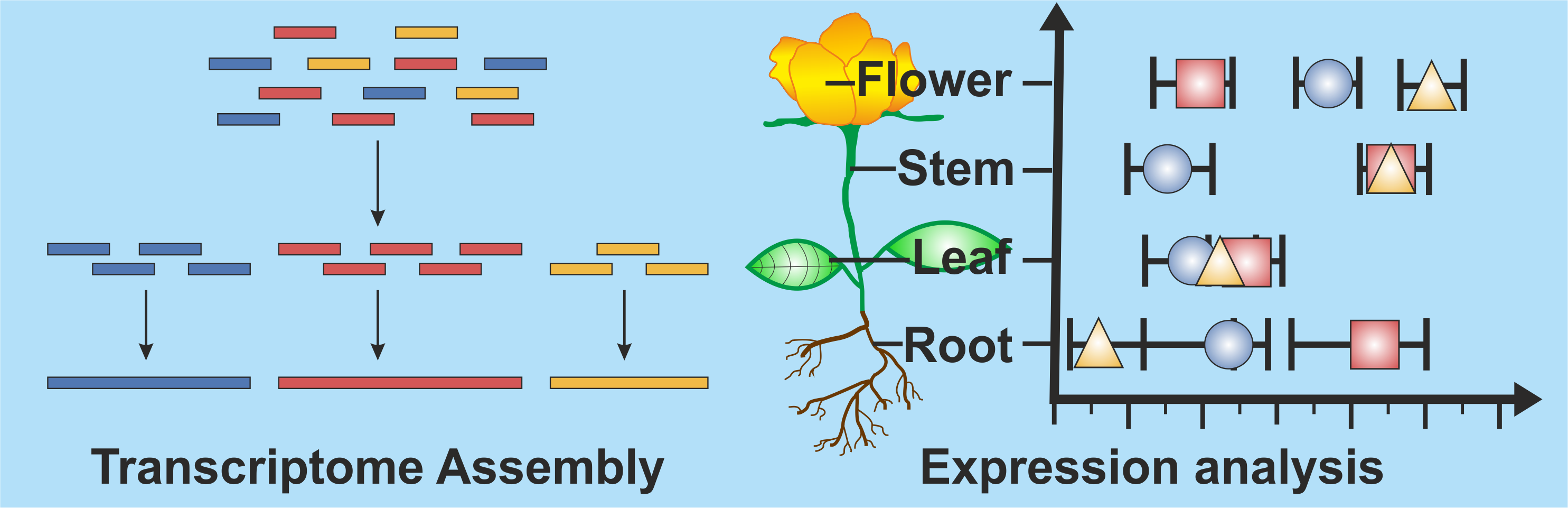
In contrast to bacteria, a higher complexity of eukaryotic cells comprises tissue specific expression of genes, occurrence of post-transcriptional changes and alternative splice forms. Analyzing tissue and stress dependent expression on transcriptomic and proteomic level could give insights in core sets of plant specific expression patterns. Furthermore, comparing the expression pattern and function as well as the gene composition in different plant species can clarify the evolution of plants. Besides analysis of structural and domain architecture on RNA and protein level to detect possible motifs which are required for targeting or stress related answers are of interest. For example, membrane-embedded, complex translocation systems are responsible for the transport of proteins across membranes. The evolution of these systems starting with bacterial predecessors up to highly complex molecular machines present in Viridiplantae is of particular interest. Based on this evolutionary data we develop structural as well as functional models of these complexes. This work is supported by the development of new bioinformatics methods, data mining, sequence analysis, ortholog search, NGS analysis, Mass spectrometry and de novo modeling.

Zero-G lab

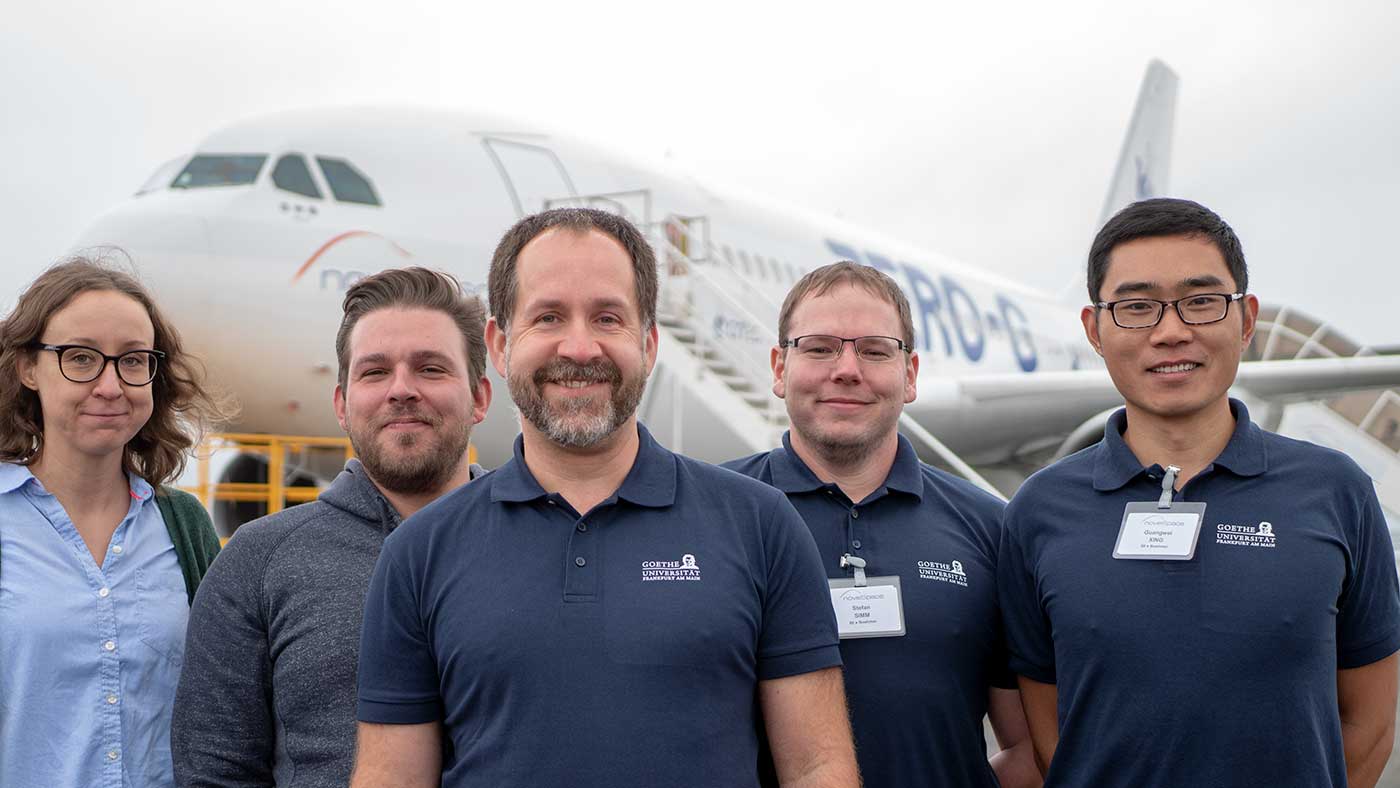
Due to their sessile lifestyle, an essential ability of plants is to adjust their growth towards or away from environmental stimuli. Plant responses that involve directed movements are called tropisms. Among the best-known tropisms are phototropism, the response to light, and gravitropism, the response to gravity. Gravity is one of the major factors that govern root growth in plants. Since the emergence of land plants, gravitropism allowed plants to adjust root growth to maximize access to water and nutrients and shoots to explore and exploit space on and above the surface of the Earth.

A particular focus of the group is on the nature of the gravireceptor, the role of early signaling pathways and secondary messengers, hormones, and the cytoskeleton. We perform experiments in altered gravity with the use of clinostats, centrifuges, and experimentation in the almost stimulus-free environment of microgravity provided by drop towers, parabolic flights of aircraft, sounding rockets, and low earth orbit space stations, like the International Space Station, which are increasingly contributing to our understanding of plant gravity sensing and orientation.